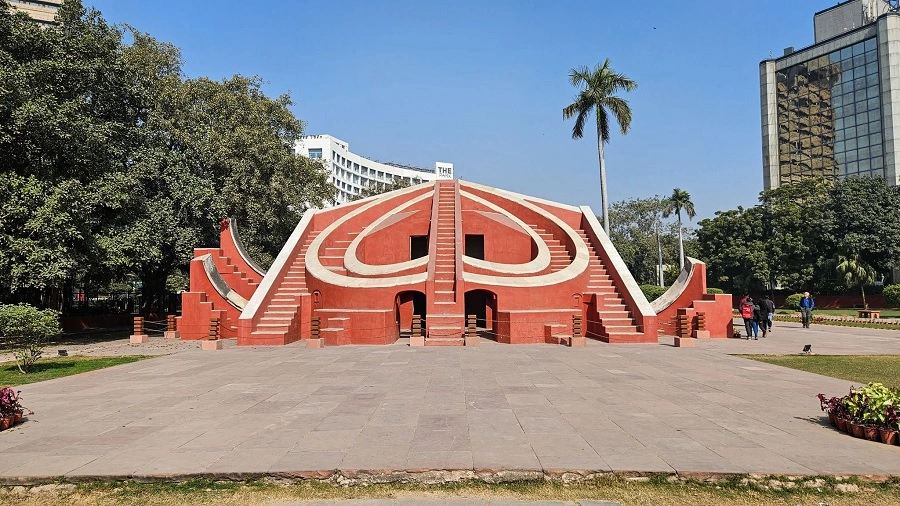

Jantar Mantar Delhi
Jantar Mantar Delhi is considered one of India’s most fascinating historical observatories. Located within the heart of New Delhi near Connaught Place, this architectural marvel showcases India’s incredible scientific achievements in the course of the 18th century. Built by Maharaja Sawai Jai Singh II, the monument includes huge astronomical instruments that have been designed to measure time, are expecting eclipses, determine planetary positions, and have a look at celestial bodies with amazing accuracy.
Today, Jantar Mantar Delhi attracts heaps of vacationers, students, historians, and astronomy fanatics every year. Besides being an vital heritage monument, it represents India’s advanced knowledge of astronomy long before the modern-day generation emerged.
Whether you’re making plans for your first go or honestly curious about its scientific importance, this guide covers the whole lot you want to realize.
Table of Contents
Jantar Mantar Delhi – Quick Summary
| Feature | Details |
|---|---|
| Location | Connaught Place, New Delhi |
| Built By | Maharaja Sawai Jai Singh II |
| Year of Construction | 1724 |
| Purpose | Astronomical observations and time calculation |
| UNESCO Status | Delhi’s Jantar Mantar is not a UNESCO site (Jaipur’s Jantar Mantar is) |
| Main Attraction | Giant astronomical instruments |
| Timings | 6:00 AM – 6:00 PM (Daily) |
| Average Visit Duration | 1–2 Hours |
| Nearest Metro Station | Patel Chowk (Yellow Line) |
| Photography | Allowed |
| Best Time to Visit | October to March |
History of Jantar Mantar Delhi
The records of Jantar Mantar Delhi dates back to 1724, when Maharaja Sawai Jai Singh II, the ruler of Jaipur, commissioned its production. Jai Singh II became deeply inquisitive about astronomy and believed that present astronomical tables contained inaccuracies.
To improve celestial calculations, he constructed five observatories across India:
- Delhi
- Jaipur
- Ujjain
- Mathura (now commonly destroyed)
- Varanasi
Among those, the Delhi observatory became the primary to be built.
His intention changed into combining Indian astronomical traditions with know-how from Persian, Islamic, and European pupils. Instead of relying on small metallic gadgets, Jai Singh designed large masonry systems that reduced observational errors.
Even after almost 300 years, a lot of these gadgets continue to illustrate top notch engineering precision.
Why is Jantar Mantar Delhi Famous?
Several motives make Jantar Mantar Delhi one in all India’s maximum essential scientific monuments.
Major Highlights
- One of the oldest astronomical observatories in India
- Built absolutely for naked-eye astronomical observations
- Unique geometric architectural layout
- Educational destination for astronomy enthusiasts
- Popular background site close to Connaught Place
- Excellent instance of India’s clinical innovation
Unlike regular monuments, every structure interior Jantar Mantar served a scientific cause in preference to an ornamental one.
Architecture of Jantar Mantar Delhi
The architecture of Jantar Mantar Delhi is a really perfect mixture of technological know-how, mathematics, and layout. The observatory includes large scale masonry gadgets crafted from stone, brick, and plaster.
These systems have been cautiously aligned in step with the Earth’s axis and celestial coordinates.
Architectural Features
- Red sandstone creation
- Massive triangular and circular structures
- Precise angular measurements
- Mathematical symmetry
- Open air observatory design
Each device becomes designed for a selected astronomical calculation.
Main Instruments at Jantar Mantar Delhi
The observatory homes several massive devices.
1. Samrat Yantra
The Samrat Yantra is the biggest tool at Jantar Mantar Delhi.
Purpose
- Measures nearby time
- Determines the Sun’s function
- Calculates declination
It functions as a giant sundial and might estimate time with terrific accuracy under perfect conditions.
2. Jai Prakash Yantra
This hemispherical structure enables observers to recognize celestial coordinates.
Uses
- Tracking stars
- Measuring altitude
- Studying constellations
- Astronomical training
3. Ram Yantra
The Ram Yantra measures the altitude and azimuth of celestial items.
Its circular design lets astronomers decide the exact role of planets and stars.
4. Misra Yantra
One of the most interesting contraptions, the Misra Yantra, combines more than one gadget into one shape.
It turned into particularly used for:
- Determining the shortest and longest days
- Noon calculations
- Measuring sun positions
Scientific Importance of Jantar Mantar Delhi
One of the most exceptional factors of Jantar Mantar Delhi is its scientific accuracy.
Although contemporary telescopes have changed conventional remark methods, the observatory demonstrates:
- Advanced mathematical information
- Astronomical precision
- Engineering excellence
- Practical know-how of planetary motion
It displays how Indian astronomers determined celestial activities centuries earlier than virtual devices.
Jantar Mantar Delhi Timings
Visitors can discover the monument in the course of the week.
| Day | Opening Hours |
|---|---|
| Monday | 6:00 AM – 6:00 PM |
| Tuesday | 6:00 AM – 6:00 PM |
| Wednesday | 6:00 AM – 6:00 PM |
| Thursday | 6:00 AM – 6:00 PM |
| Friday | 6:00 AM – 6:00 PM |
| Saturday | 6:00 AM – 6:00 PM |
| Sunday | 6:00 AM – 6:00 PM |
Note: Timings may additionally occasionally trade on unique authorities holidays or because of renovation.
Jantar Mantar Delhi Ticket Price (2026)
The monument is managed by way of the Archaeological Survey of India (ASI).
| Visitor Category | Ticket Price |
|---|---|
| Indian Citizens | ₹25 (Approx.) |
| SAARC/BIMSTEC Visitors | ₹25 |
| Foreign Tourists | ₹300 (Approx.) |
| Children below 15 | Free |
Online price tag booking is available via the authentic ASI ticketing portal.
Best Time to Visit Jantar Mantar Delhi
The perfect season to visit Jantar Mantar Delhi is October to March.
Why?
- Pleasant weather
- Comfortable sightseeing
- Clear skies for pictures
- Less warmth as compared to summer time
Avoid visiting for the duration of high afternoon hours in May and June due to the fact temperatures can exceed 40°C.
How to Reach Jantar Mantar Delhi
The observatory enjoys tremendous connectivity.
By Metro
The nearest metro stations are:
- Patel Chowk Metro Station
- Rajiv Chowk Metro Station
Patel Chowk is inside on foot.
By Bus
Delhi Transport Corporation (DTC) buses frequently function round Connaught Place.
By Taxi or Cab
Uber, Ola, and local taxis are without problems to be had throughout Delhi.
By Train
The nearest railway station is New Delhi Railway Station, about 3 km away.
Nearby Attractions
A visit to Jantar Mantar Delhi can easily be blended with numerous nearby sights.
| Attraction | Distance |
|---|---|
| Connaught Place | 700 meters |
| India Gate | 2.5 km |
| Rashtrapati Bhavan | 3 km |
| Gurudwara Bangla Sahib | 1 km |
| National Museum | 2.5 km |
| Janpath Market | 1 km |
These locations can easily be covered in an unmarried day.
Visitor Tips
To make your go exciting, keep these tips in mind.
- Visit early in the morning
- Carry drinking water
- Wear snug shoes
- Read the information boards
- Hire a manual if interested by astronomy
- Bring a camera for photography
- Avoid mountain climbing on contraptions
- Respect monument regulations
Interesting Facts About Jantar Mantar Delhi
Here are some charming records:
- Built nearly three hundred years ago.
- Designed without modern computers or telescopes.
- Contains massive astronomical instruments as opposed to small devices.
- Inspired the development of different observatories across India.
- Still demonstrates stunning astronomical accuracy.
- Reflects the scientific achievements of medieval India.
- Frequently visited by means of architecture and engineering students.
Why You Should Visit Jantar Mantar Delhi
There are endless historic monuments in Delhi, but Jantar Mantar Delhi offers something specific, an aggregate of science, structure, and history.
Visitors can:
- Learn about historical astronomy
- Experience India’s scientific historical past
- Explore unique geometric systems
- Enjoy photography
- Spend satisfactory academic time with own family
- Visit close by sights in imperative Delhi
For record enthusiasts and curious vacationers alike, it is a memorable forestall.
Summary
Jantar Mantar Delhi is some distance extra than an historic monument. It is a first rate image of India’s clinical excellence, mathematical precision, and architectural innovation. Constructed in 1724 by Maharaja Sawai Jai Singh II, the observatory showcases big gadgets that were as soon as used to calculate time, examine planetary moves, and study celestial phenomena with surprising accuracy.
Its valuable location, lower priced entry fee, educational fee, and historical significance make it one of the points of interest in New Delhi. Whether you’re interested in astronomy, architecture, or history, Jantar Mantar Delhi offers a unique experience that stands aside from traditional traveler sites.
Please view more than FAQs
1. What is Jantar Mantar Delhi famous for?
Jantar Mantar Delhi is famous for its massive astronomical units used to determine time, look at celestial bodies, calculate eclipses, and study planetary actions. It represents one of India’s best medical achievements of the 18th century.
2. Who constructed Jantar Mantar Delhi?
It was constructed by Maharaja Sawai Jai Singh II in 1724 as a part of his community of astronomical observatories across India.
3. What are the opening timings of Jantar Mantar Delhi?
The monument is usually open each day from 6:00 AM to 6:00 PM, although traffic needs to verify timings earlier than making plans for an experience, mainly on public holidays.
4. Are images allowed inside Jantar Mantar Delhi?
Yes. Photography for non-public use is normally allowed, making it a popular vacation spot for travelers, college students, and picture fanatics.
5. How much time is needed to discover Jantar Mantar Delhi?
Most site visitors spend 1 to two hours exploring the observatory, studying the informational shows, and viewing the astronomical gadgets.